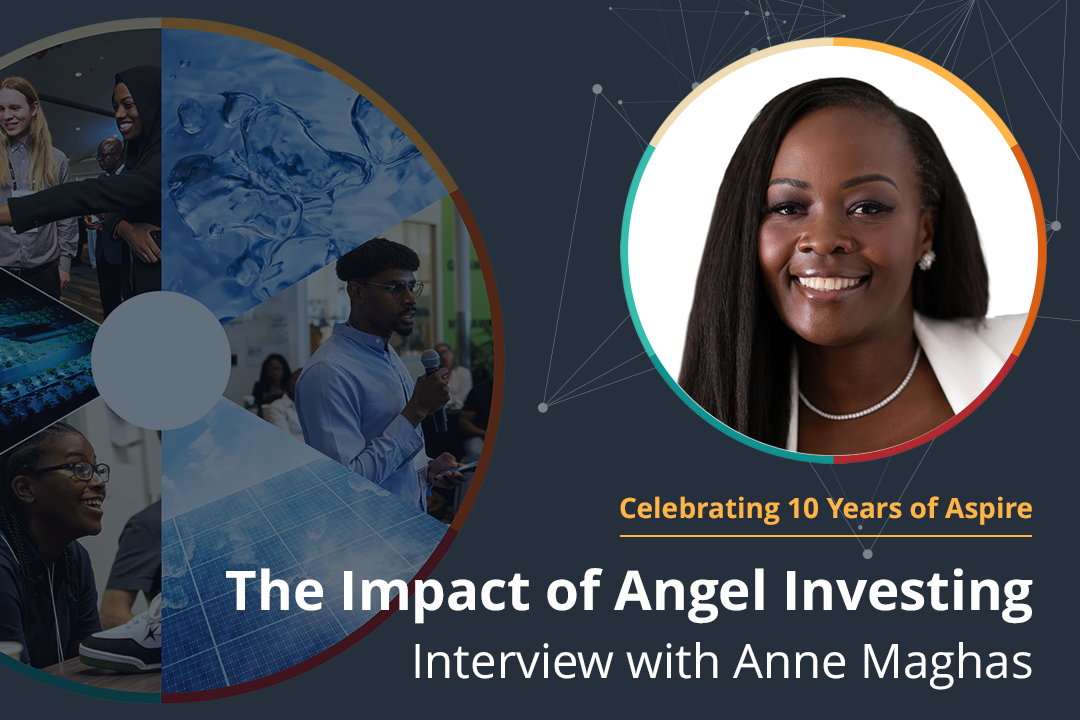
The Aspire Impact: Bridging the Hard Tech Funding Gap
Aspire is a five-week, intensive investor-engagement training program designed to connect experienced mentors and investors with startup teams developing hardtech innovations and products, with a focus on medtech and climatetech.
These startups often encounter the dreaded “Valley of Death,” a funding gap that arises after completing customer discovery and market research. Despite demonstrating market potential, startups lack the time and funding needed to overcome regulatory hurdles or produce prototypes—common challenges for physical technology ventures. To address these challenges and help bridge this critical gap, VentureWell launched the Aspire program 10 years ago as the most advanced phase in the VentureWell Accelerator suite.
Investor-mentors like Maghas play a crucial role in Aspire’s success. From 2015 to 2023, 177 startup teams participated in the program; 81% of these companies are still active. Notably, over half of these companies are women-led, and 39% are BIPOC-led. While these figures align proportionally with the general U.S. population, they are exceptional within I&E, where women and BIPOC founders are often underrepresented and underfunded.
We interviewed Maghas about her experience as a mentor and angel investor.
When you’re mentoring a startup, what do you focus on?
I’m profoundly interested in the leadership side of doing business. In Aspire, there’s a nearly one-to-one ratio of investor-mentors and startups, so we have experts on various subjects. I zoom in on the transition from founder to CEO and the leadership challenges that come along with that process. Because I’ve been through this myself and mentored multiple ventures through it as well, I can spot the problems they’re going to face.
I preemptively ask the questions that will get emerging entrepreneurs thinking about areas that will be a struggle if they are not addressed promptly and effectively. We talk about the relationships between co-founders and how well aligned they are about the direction of the business and the division of labor. Left unexamined, co-founder relationships can get messy. I help them see the weak spots before they break so they can talk the issues out. I show them the value of managing their relationship as part of managing the company.
This is also a key part of creating the culture of the company. How you, as the leader, treat yourself and how you treat others—that is the culture of the company at the start. Other people won’t value your time if you don’t value your time; it’s important to establish boundaries and model this for the team. This combats burnout, which is a very common problem at startups—especially mission-driven startups where people are passionate about their solution. You still need to take time to take care of yourself.
There’s a lot of talk about the “family and friends” funding round, where founders reach out to the people they know and raise tens or even hundreds of thousands of dollars. Angel investors fill this gap for founders whose personal networks don’t include that kind of wealth. I get to be the “family and friends” for these founders.
What makes you so passionate about mentoring women founders of color?
When I started angel investing and mentoring, I asked myself: “If I’m going to spend my money and my time, who do I want to impact the most? Who am I uniquely positioned to impact?”
The answer is other women and BIPOC founders—and angel investors. I have a unique perspective to offer these individuals. I have lived experience. I know what it is to walk into a space where you feel like you don’t belong because there are no other people like you. And unfortunately that’s the reality in much of I&E, and it’s something many early-stage women and BIPOC founders are going to experience or are already experiencing.
When I see a woman of color who is working hard and looking for investor funding, I know what she is working against. The most important factor in an angel investor deciding to write a check is deciding if they trust the founder, so these founders have to establish trust with someone who they have very little in common with. The more diverse angel investors we have, the easier it will be for these founders to establish trust with an investor and get the funding they need. The more of us who do that, the more the situation will change. So that’s where I’m putting my money and my time.